Classroom Insight
Why educators want paper-based assessments
We keep hearing the same thing from teachers, principals, and district leaders: if AI is going to help, it should help teachers move faster without asking students to do more of their work on screens.
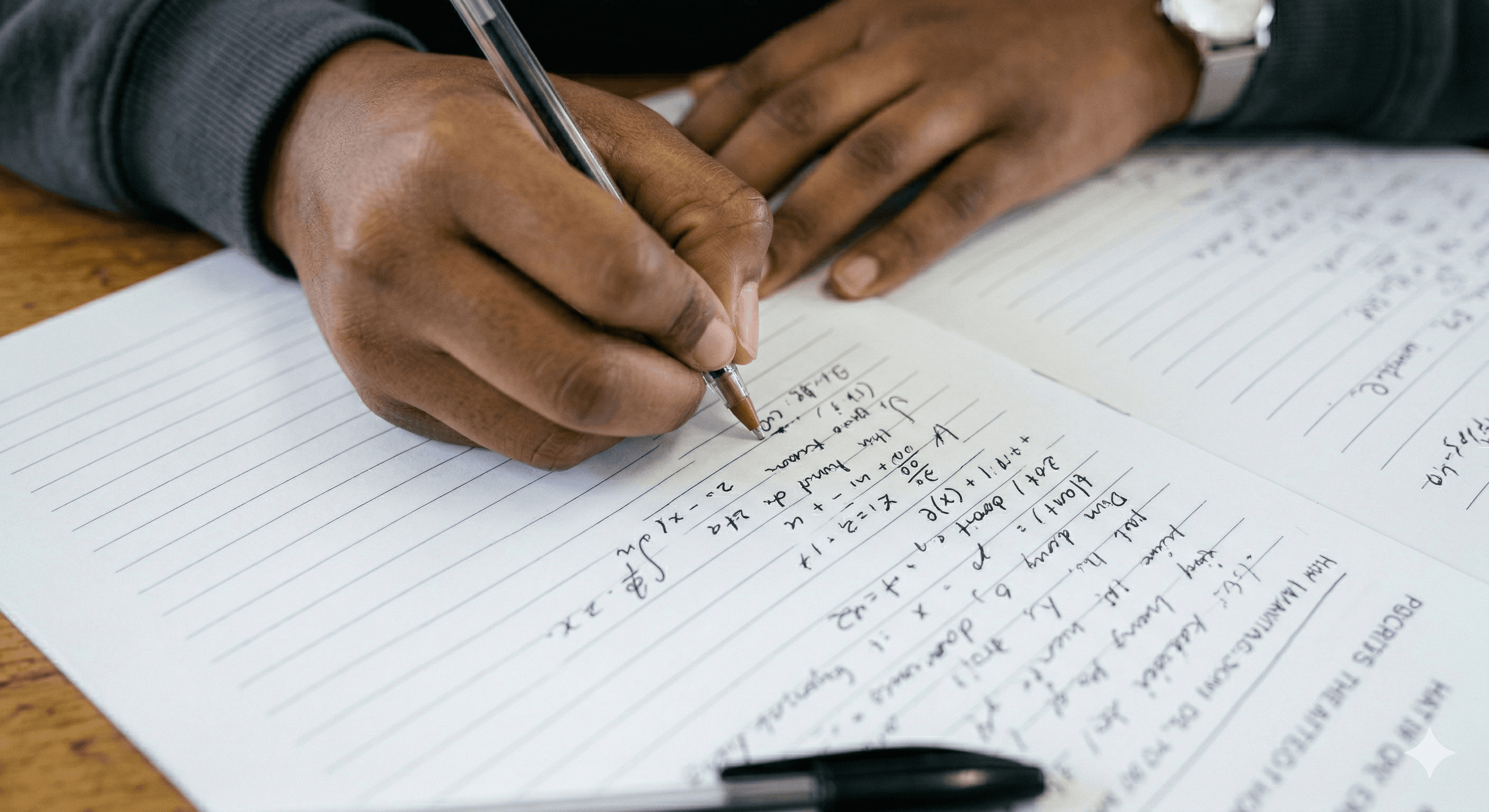
What stands out is how consistently this shows up across different roles. Classroom teachers talk about feedback and workload. Principals talk about focus, responsible AI use, and implementation. District leaders talk about scale. But they are all circling the same design principle: reduce friction for teachers without changing what students should be doing during class.
The details differ by school and role, but the throughline stays remarkably consistent: educators do not want more complexity in the classroom. They want better feedback, less grading drag, and technology that stays in service of teaching instead of taking center stage.
Why Many Educators Still Want Strong Paper-Based Options
The strongest case for paper-based assessment is not that paper always wins or that digital tools are inherently worse. UNESCO’s 2023 technology-in-education work makes the more useful point: learning benefits disappear when technology is used in excess or without qualified teaching around it, and technology should support rather than supplant human interaction in learning.[1]
More specifically, the handwriting research points in a useful direction. A 2021 Frontiers study found that handwriting supported greater memorization of new words than keyboard typing and was associated with more positive mood during learning. Findings like that help explain why many teachers still prefer paper for at least some classroom tasks and checks for understanding.[3]
That aligns with broader literacy research. In a Psychological Science study on literacy learning, handwriting produced faster learning and greater generalization to untrained tasks than nonmotor practice. Again, that does not settle every paper-versus-digital question, but it does help explain why pen-and-paper work still feels valuable to many educators.[5]
The reading evidence itself is more mixed, which is exactly why schools should be careful about one-size-fits-all technology decisions. A 2024 meta-analysis of paper versus digital reading comprehension found no significant overall winner and pointed to context and task design as key moderators. That is a reason to choose paper deliberately where it supports the learning goal rather than assuming digital automatically means better.[4]
That is part of why Nicky Froland’s story is so compelling. Her case for Classwise was never just about efficiency. It was about preserving the pen-and-paper classroom even while handling a grading challenge large enough that manual workflows would have broken down.
Why Paper Often Feels Simpler In Real Classrooms
There is also a practical classroom-management reason school leaders keep raising this issue. OECD’s PISA 2022 analysis found that around 30% of students reported being distracted by their own digital devices in most or every mathematics lesson, and around 25% reported being distracted by classmates’ devices.[2]
That same OECD analysis found that students who reported frequent distraction from digital devices in class scored lower in mathematics. UNESCO’s framing is helpful here too: if a technology choice weakens attention, increases friction, or replaces rather than supports teacher-led learning, schools should not assume it is progress. Paper-based assessment will not solve every attention problem, but the data helps explain why teachers and principals often see paper as the cleaner, lower-friction option during class.[2][1]
Fast Feedback Is Still Worth Fighting For
The point is not paper for its own sake. The point is preserving what works about paper while fixing what has always been hard about it: the delay. Feedback matters enough that schools should care not just about whether students get it, but how soon and how useful it is.
The deeper research base supports that. A major 2020 meta-analysis found a medium overall effect of feedback on student learning, but also showed that feedback quality and information content matter. EEF’s teaching and learning toolkit reaches a similar practical conclusion for schools, rating feedback as high impact for very low cost and estimating an average of six additional months of progress when it is done well.[6][7]
That is why JT's story matters so much. Getting five hours back is important, but the stronger educational point is that students receive more useful feedback while the work is still fresh enough to act on. Speed only matters if it improves learning; in this case, it does.[6][7]
Teacher Time Is Not Separate From Instructional Quality
There is also a staffing and sustainability layer to this conversation. RAND’s 2024 State of the American Teacher work found that 59% of teachers reported frequent job-related stress and 60% reported burnout. Administrative work outside teaching remained one of the top stressors.[8]
That matters because grading and feedback are not just student-experience issues. They are teacher-capacity issues. If a tool can preserve teacher judgment while reducing repetitive grading and gradebook work, it does not just save time. It protects the conditions required for teachers to keep doing thoughtful instructional work at all.[8]
What Educators Seem To Want From AI
The strongest pattern across these conversations is not “put everything on AI.” It is almost the opposite. Teachers want AI to handle the repetitive work, not replace teacher judgment. Principals want responsible use that keeps students doing their own thinking. District leaders want tools they can scale without making classroom life more complicated.
UNESCO's language around technology being used on educational terms rather than tech's terms matches what we hear in practice. For many educators, the most attractive model is not more student screen time by default. It is paper in students' hands, teacher judgment still in control, and AI doing the behind-the-scenes work that returns time to the adults in the system.[1]
Sam Procopio put that especially well from a principal perspective: students should be doing the work in an AI-free environment while grading and feedback happen behind the scenes. That framing is useful because it treats responsible AI use as a design choice, not just a policy slogan.
What This Points To In Practice
To me, the practical takeaway is straightforward: schools do not need to choose between paper-based student work and fast, useful feedback. The better path is to preserve the classroom conditions teachers trust while improving the speed and quality of what comes back to students.
That is the logic behind how we think about Classwise. Students can keep doing the work on paper, teachers can stay in control of judgment, and the grading, feedback, and gradebook work can move much faster behind the scenes. If educators are asking for less student screen time and better feedback at the same time, the right response is to build for both.
Stories Behind This Post
How one science teacher used Classwise for a school-wide assessment of nearly 1,000 students.
Why faster feedback matters as much as the time savings for teachers.
A principal's perspective on responsible AI use in a paper-based classroom.
Sources
8 References
Sources
8 References
- [1] UNESCO issues urgent call for appropriate use of technology in education
UNESCO Global Education Monitoring Report. UNESCO says learning benefits disappear when technology is used in excess or without a qualified teacher, and argues that technology should support rather than supplant human interaction in teaching and learning.
- [2] PISA 2022 Results (Volume II): Limiting the distractions caused by using digital devices in class
OECD. OECD reports that around 30% of students are distracted by their own devices in most or every mathematics lesson and around 25% are distracted by classmates’ devices; students reporting frequent distraction scored 15 points lower in mathematics.
- [3] Advantage of Handwriting Over Typing on Learning Words: Evidence From an N400 Event-Related Potential Index
Frontiers in Human Neuroscience. This study found that handwriting supported greater memorization of new words than keyboard typing and was associated with more positive mood during learning.
- [4] Which reading comprehension is better? A meta-analysis of the effect of paper versus digital reading in recent 20 years
Telematics and Informatics Reports. A 2024 meta-analysis of 37 experimental studies found no significant overall difference between paper and digital reading comprehension, with results depending on context and moderating variables.
- [5] The Effects of Handwriting Experience on Literacy Learning
Psychological Science. This study found that handwriting, compared with nonmotor practice, produced faster learning and greater generalization to untrained tasks.
- [6] The Power of Feedback Revisited: A Meta-Analysis of Educational Feedback Research
Frontiers in Psychology. A meta-analysis covering 435 studies and more than 61,000 learners found a medium overall effect of feedback on student learning and stressed that the information content of feedback matters.
- [7] Feedback
Education Endowment Foundation. EEF rates feedback as high impact for very low cost, estimates an average of six additional months of progress, and notes that feedback can be effective during, immediately after, and some time after learning.
- [8] Teacher Well-Being and Intentions to Leave in 2024
RAND Corporation. RAND found that 59% of teachers reported frequent job-related stress in 2024, 60% reported burnout, and administrative work outside teaching remained one of the top stressors.

Derah Onuorah
Co-Founder, Classwise AI
March 22, 2026 • 7 min read